


Updated 29th January 2025 | Fact Checked By Jess Knauf, Co-Founder, Family Law Service
Quick Summary:
- Mediation is not suitable when there’s domestic abuse, safeguarding concerns, or significant power imbalances
- Court proceedings may be necessary if mediation is inappropriate or has failed
- You’ll need a MIAM exemption letter to proceed directly to court in certain situations
- Legal advice helps you understand your options when mediation can’t work
- Family Law Service offers court form completion, CAFCASS prep, and fixed-fee consultations
- Free legal aid may be available if you have evidence of domestic abuse
Is you are wondering when Mediation is not suitable for your family law case? You’re not alone. While mediation can help many separating couples reach agreements, it’s not always the right path, and that’s completely okay.
Perhaps you’ve already tried mediation and it didn’t work. Maybe you’ve been told you need to attend a MIAM (Mediation Information and Assessment Meeting) before going to court, but you’re worried about sitting in a room with your ex-partner. Or you might be dealing with circumstances that make mediation impossible or unsafe.
The good news? There are clear alternatives when mediation is not suitable, and understanding your options can help you move forward with confidence.
What Does “Mediation Not Suitable” Actually Mean?
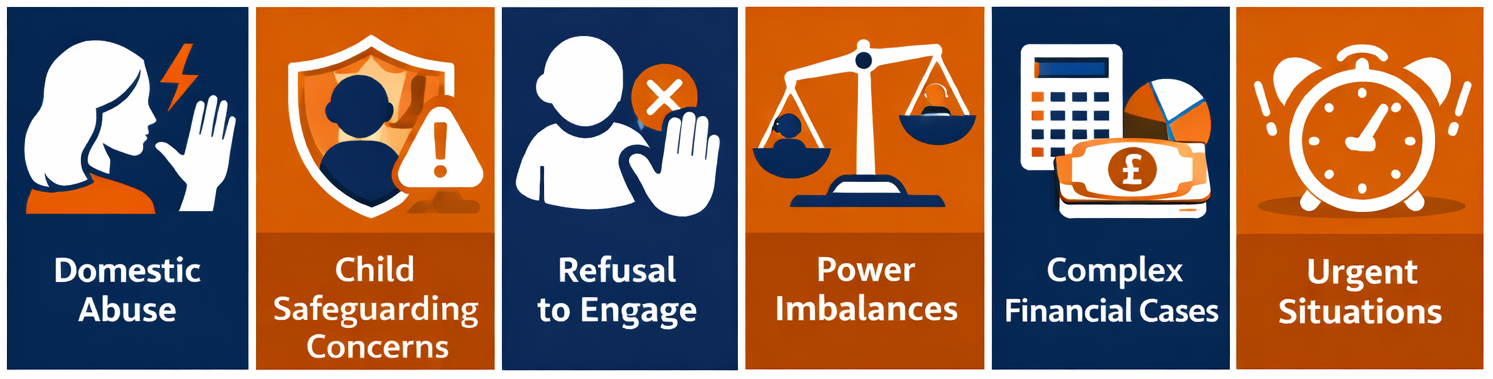
When we talk about when mediation is not suitable, we’re referring to situations where:
- It wouldn’t be safe for you to meet with the other party
- There’s a significant power imbalance that can’t be managed
- One person refuses to engage meaningfully
- The circumstances make neutral negotiation impossible
- Urgent court intervention is needed to protect you or your children
“We often see clients who’ve been told they ‘must try mediation’ but feel stuck because their situation doesn’t fit that mould,” says Jess Knauf, Co-Founder. “It’s important to know that the law recognises mediation isn’t always appropriate, and there are proper exemptions in place.”
Common Situations When Mediation is not Suitable
Domestic Abuse and Violence
This is the most significant reason when mediation is not suitable. If you’ve experienced domestic abuse, violence, or coercive control, you’re automatically exempt from attending a MIAM.
You don’t need to face your abuser in mediation, even with shuttle arrangements. The power dynamic and potential for further harm make it inappropriate.
Evidence that supports a MIAM exemption includes:
- Police reports or crime reference numbers
- Non-molestation or occupation orders
- Letters from domestic abuse support services (within 24 months)
- Evidence from your GP, health visitor, or social services
- Criminal convictions for violence or abuse
Child Safeguarding Concerns
When there are serious concerns about a child’s safety or wellbeing, mediation may not be suitable. This includes:
- Allegations of child abuse or neglect
- Ongoing social services involvement
- Situations where CAFCASS has raised safeguarding flags
- Cases involving parental alienation requiring court intervention
I remember working with a client at Mediate UK who initially wanted to try mediation, but disclosed significant safeguarding concerns during the MIAM. We properly documented why mediation wasn’t suitable and supported her application for a MIAM exemption.
Significant Power Imbalances
Even without abuse, some relationships have power dynamics that make fair negotiation impossible:
- One party controlling all finances with no transparency
- Mental health issues affecting decision-making capacity
- Immigration status being used as leverage
- One person being significantly more legally knowledgeable
Refusal to Engage or Bad Faith Participation
Mediation isn’t suitable when one party:
- Flatly refuses to attend or participate
- Uses mediation to delay court proceedings
- Attends but refuses to negotiate reasonably
- Continually cancels or reschedules appointments
Complex Financial Cases Requiring Full Disclosure
Some financial matters need court processes because:
- One party is hiding assets or income
- Business valuations require expert evidence
- Pension sharing orders need actuarial input
- International assets need specialist handling
Urgent Situations
When you need immediate court protection, mediation simply isn’t suitable:
- Emergency protective orders needed
- Imminent risk of child abduction
- Assets about to be dissipated or moved abroad
- Immediate housing security required
Want to get started? Just enter your name and we’ll guide you through the next steps.
What Happens When Mediation Isn’t Suitable?
Getting a MIAM Exemption
To apply to court without attempting mediation, you’ll need either:
- Form C100 (for child arrangements) with a MIAM exemption ticked
- Form A (for financial orders) with exemption reasons stated
Your solicitor can help you complete these forms and ensure your exemption is properly documented. At Family Law Service, we offer court form completion services to make sure everything is correct before filing.
Going Straight to Court
When mediation isn’t suitable, court proceedings might include:
- First Hearing Dispute Resolution Appointment (FHDRA) for child matters
- First Directions Appointment (FDA) for financial cases
- Evidence gathering and disclosure
- CAFCASS reports (for children matters)
- Final hearing
“Many clients worry that choosing court over mediation makes them look difficult or aggressive,” Jess explains. “Actually, courts understand that mediation isn’t always appropriate. What matters is presenting your case clearly and showing you’ve acted reasonably.”
Preparing for Court Without Mediation
This is where Family Law Service really helps:
- Court prep meetings so you know what to expect
- CAFCASS preparation if a welfare officer will interview you
- Case reviews to strengthen your position
- Fixed-fee legal consultations for one-hour focused advice
- Form E assistance for financial disclosure
“We recently helped a client who’d been refused mediation because her ex-partner wouldn’t engage.” – Recalls Jess – “Through our court prep meeting, we walked her through exactly what would happen at the FHDRA, what questions to expect, and how to present her case. She felt prepared rather than panicked.”
Alternatives to Traditional Mediation
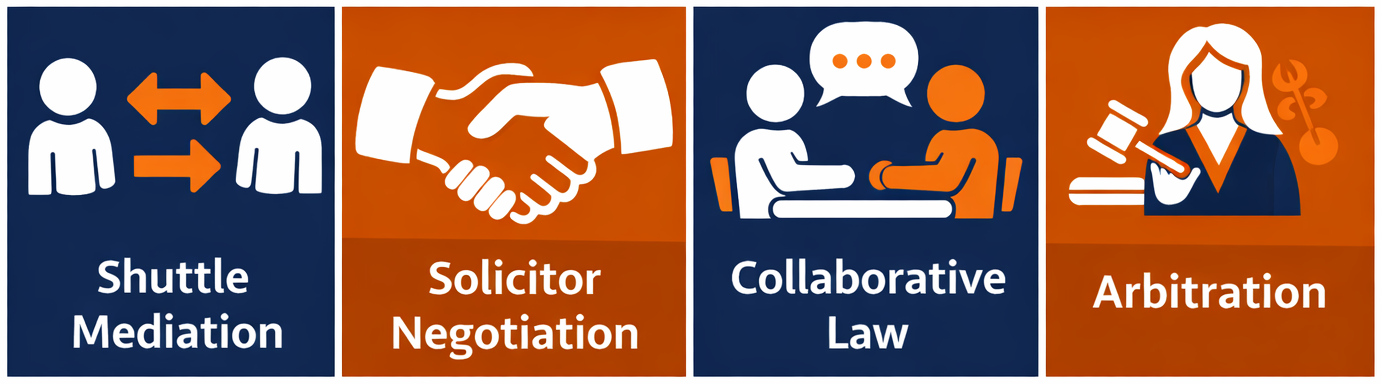
Even when mediation is not suitable face-to-face, alternatives might include:
Shuttle Mediation
The mediator meets each party separately, going between rooms. This can work when there’s low-level conflict but not in abuse cases. Mediate UK offers shuttle mediation online and in person.
Solicitor Negotiation
Your solicitors communicate directly, negotiating on your behalf. This maintains distance while working towards agreement.
Collaborative Law
Both parties and their solicitors sign an agreement to resolve matters without court. Everyone commits to open negotiation.
Arbitration
A family law arbitrator makes binding decisions, like a private judge. Faster than court but with similar formality.
Frequently Asked Questions
Can I be forced to do mediation even if it’s not suitable?
No. If you have valid grounds for a MIAM exemption, particularly domestic abuse or safeguarding concerns, you cannot be compelled to attend mediation. The court will accept your exemption if properly documented.
How much does it cost when mediation is not suitable and I need to go to court?
Court application fees are £232 for a C100 (child arrangements) and £275 for a Form A (financial order). Legal support varies, but Family Law Service offers fixed-fee options including £150 for a one-hour consultation or £350 for comprehensive court form completion.
Will the judge think badly of me for not trying mediation?
Not if you have legitimate reasons why mediation wasn’t suitable. Judges understand that mediation only works when both parties can engage safely and fairly. Document your reasons clearly and show you’ve acted reasonably throughout.
What evidence do I need to prove mediation isn’t suitable?
For domestic abuse, you’ll need evidence less than 24 months old such as police reports, protection orders, or letters from support services. For other reasons like refusal to engage, document all attempts at communication and any refusals. Keep emails, texts, and dated notes.
Can I change my mind if I initially said mediation wasn’t suitable?
Yes, you can try mediation at any stage, even after court proceedings have started. If circumstances change or you feel safer with proper arrangements in place, you can pause court proceedings to attempt mediation. The court may even order you to try it.
How long does it take to get to court if mediation isn’t suitable?
Once you’ve filed your application with a valid MIAM exemption, you’ll typically get a first hearing date within 4-6 weeks for urgent child matters, though this varies by court. Financial cases can take longer. Use this time to prepare thoroughly with proper legal support.
Ready to Take the Next Step?
Filing for divorce is just the beginning. What you’re entitled to financially can make a huge difference to your future security and peace of mind.