



Updated 27th January 2026 | Fact Checked By Jess Knauf, Co-Founder, Family Law Service
Quick Summary: What is a MIAM?
- What is a MIAM is a Mediation Information and Assessment Meeting, a mandatory pre-court meeting lasting 45-60 minutes
- Most family court applications require a MIAM before you can proceed, including child arrangements and financial disputes
- MIAM costs typically range from £115-£180, though legal aid may cover it if you qualify
- There are 15 specific exemptions, including domestic abuse, urgency, and previous MIAM attendance
- MIAM certificates remain valid for 4 months from the date of issue
- Changes made in April 2024 strengthened the MIAM requirement and expanded options beyond traditional mediation
Understanding the question – What is a MIAM?
What is a MIAM? If you’re facing family court proceedings, this might be the most important question you ask. A MIAM (Mediation Information and Assessment Meeting) is a legal requirement for most people before they can apply to court for family matters in England and Wales.
It’s a short meeting with an accredited mediator, typically lasting between 45 minutes and an hour. You’ll attend separately from the other party, giving you space to talk openly about your situation without pressure.
During this meeting, the mediator will explain different ways to resolve your dispute without going to court, assess whether mediation might work for you, and answer any questions you have about the process.
Do I Need a MIAM? When It’s Required
The short answer is: probably yes. Since the Children and Families Act 2014, and following significant changes in April 2024, MIAM attendance is mandatory for most family court applications.
You need a MIAM if you’re applying for:
- Child arrangement orders (deciding where children live and when they see each parent)
- Financial remedy orders (dividing money, property, or pensions after separation)
- Spousal maintenance applications
- Property adjustment orders
“A lot of people aren’t sure whether they need a MIAM or if they qualify for an exemption,” says Jess Knauf, Co-Founder of Family Law Service. “It’s worth checking properly, because getting this wrong can delay your application by months.”
The 15 MIAM Exemptions Explained
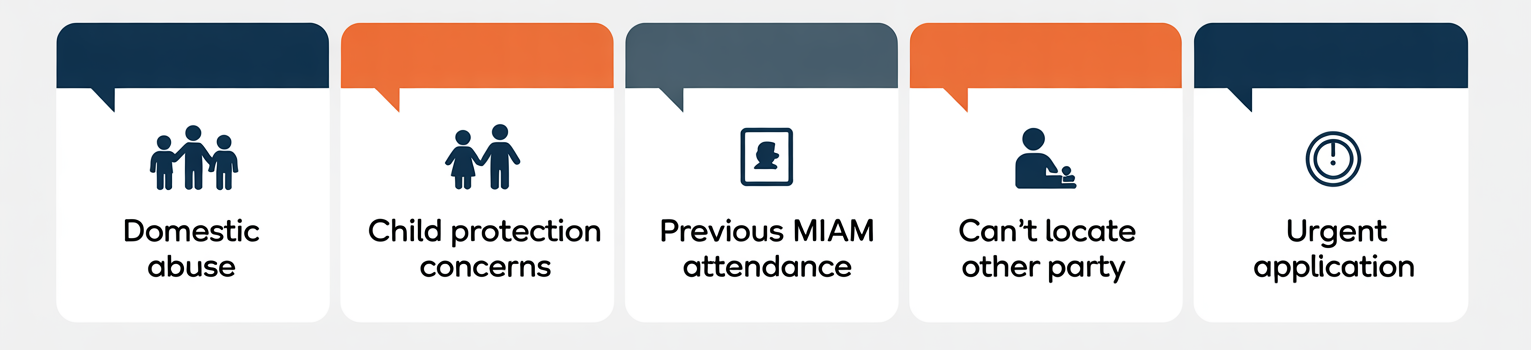
Not everyone needs a MIAM. There are 15 specific situations where you can bypass this requirement:
Safety-related exemptions:
- Domestic abuse (with evidence)
- Child protection concerns
- Risk to life, liberty, or physical safety
Practical exemptions:
- Previous MIAM attendance (within the last 4 months for the same issue)
- Previous mediation attempt for this dispute
- Cannot locate the other party
- Other party is in prison or subject to bail conditions
- Disability preventing attendance (after exploring reasonable adjustments)
Procedural exemptions:
- Urgent applications
- Without notice applications
- Bankruptcy proceedings
- International elements requiring urgent resolution
It’s important to note that you’ll typically need evidence to support your exemption claim, and the court will review this when you submit your application.
Want to get started? Just enter your name and we’ll guide you through the next steps.
What Happens During a MIAM?
A MIAM isn’t mediation itself, it’s an information meeting. Here’s what you can expect:
The mediator will:
- Explain how different types of non-court dispute resolution work (not just mediation, but also arbitration and collaborative law)
- Listen to your situation and concerns
- Discuss whether mediation or another approach might be suitable
- Answer your questions about timescales, costs, and next steps
- Assess any safety concerns or power imbalances
You won’t:
- Meet with the other party (you attend separately)
- Need to make any decisions on the spot
- Be forced into mediation if it’s not right for you
“I remember a client we had at Mediate UK” – recalls Jess – “who came to their MIAM convinced they’d need to go straight to court. After discussing their situation properly, they realised mediation could actually resolve things faster and more affordably. They reached a complete agreement about their children’s arrangements within three sessions, saving thousands in legal fees and months of stress.”
How Much Does a MIAM Cost?
MIAM costs typically range from £115 to £180 per person, depending on your location and the mediator you choose.
Good news about costs:
- If you qualify for legal aid, your MIAM is free
- If one party qualifies for legal aid, the other party’s MIAM may also be free
- The government offers up to £500 towards mediation costs for families with children (not means-tested)
- Urgent or out-of-hours MIAM appointments may cost more (around £185)
Compare this to contested court proceedings, which can cost £3,000-£8,000 for children matters and £10,000-£30,000 for financial disputes. Even if mediation doesn’t work out, you’re only investing £115-£180 to explore the option.
How Long Is a MIAM Certificate Valid?
Your MIAM certificate is valid for 4 months from the date it’s issued. This means you must submit your court application within this timeframe, or you’ll need to attend another MIAM and get a fresh certificate.
For example, if your certificate is dated 3rd December 2025, you need to file your court application by 3rd April 2026. After that date, the certificate expires.
What If Mediation Isn’t Suitable?
If the mediator determines that mediation isn’t appropriate for your situation, they’ll issue you with a signed form (C100 for child arrangements, Form A for financial matters, or FM1 for specific applications). This allows you to proceed directly to court.
Mediation might not be suitable if:
- There are significant safety concerns
- One party refuses to engage in good faith
- There’s a substantial power imbalance
- The issues are too complex for mediation alone
- Time is extremely critical
How Family Law Service Can Help After Your MIAM
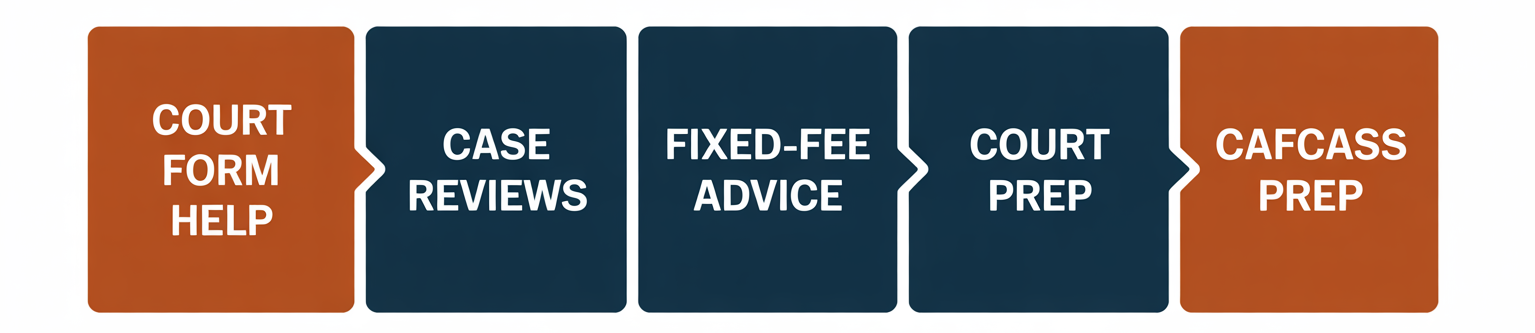
Once you’ve attended your MIAM, you might need support preparing for court or understanding your options. That’s where Family Law Service comes in.
We offer practical, fixed-fee services to help you move forward with confidence:
Court Form Completion: We’ll help you complete your C100 or Form A correctly, avoiding the frustrating delays that come from rejected applications.
Court Prep Meetings: Get ready for your first hearing with a clear understanding of what to expect and how to present your case. We off this for both Child Arrangements and Finance matters.
Case Reviews: Have a review of your situation and provide strategic advice on the strongest approach.
CAFCASS Prep Meetings: If your case involves children, we’ll prepare you for the CAFCASS interview so you can present your position clearly.
Fixed-Fee Legal Advice: Get expert legal advice on either your Parenting issues or financial issues – for a transparent, fixed fee, no surprises or escalating costs.
“We designed our services specifically for people who’ve been through a MIAM and need practical help preparing for court,” explains Jess. “Whether mediation worked or didn’t, you deserve clear guidance on what happens next.”
FAQs About MIAMs
Can I attend a MIAM online?
Yes, most mediators now offer online MIAM appointments via video call. These are just as valid as in-person meetings and can be more convenient if you have mobility issues, live far from the mediation service, or prefer remote appointments.
What if my ex-partner refuses to attend a MIAM?
You can still attend your MIAM alone. The mediator will invite the other party to attend separately, but their refusal doesn’t prevent you from getting your certificate. Courts often view refusal to attend without good reason unfavourably.
Do I need separate MIAMs for different applications?
You can use the same certificate for related applications within the 4-month validity period. However, each distinct court matter typically requires its own MIAM certificate.
What happens if I make a false exemption claim?
Making false declarations to the court is serious and could result in your case being dismissed or contempt proceedings. If you’re unsure whether you qualify for an exemption, it’s better to attend a MIAM than risk getting it wrong.
Can I change my mind and try mediation later if I claimed an exemption?
Absolutely. Claiming a MIAM exemption doesn’t prevent you from choosing mediation at any point. Many people find it helpful even when they initially thought it wouldn’t work.
Ready to Take the Next Step?
Filing for divorce is just the beginning. What you’re entitled to financially can make a huge difference to your future security and peace of mind.