


Updated 26th of January 2026 | Fact Checked By Jess Knauf, Co-Founder, Family Law Service
Going to Court Without a Solicitor – Key Points
- Legal right: You can represent yourself in any family court proceeding in England and Wales
- You’re not alone: Around 80% of people in family court now represent themselves at some stage
- Cost saving: Full solicitor representation typically costs £5,000-£30,000
- Preparation matters: Position statements, organised evidence, and practice make the difference
- Know the limits: Complex finances, abuse allegations, and final hearings are harder alone
- Middle ground exists: Court prep meetings and case reviews offer support without full representation
Going to court without a solicitor is more common than you might think. In fact, around 80% of people in family court proceedings in England and Wales now represent themselves at some point during their case.
But let’s be honest, the thought of standing up in court without legal backup is terrifying for most people.
At Family Law Service, we work with self-representing clients every week. Some walk into court confident and prepared, achieving outcomes they’re genuinely happy with. Others tell us they wish they’d had more support before stepping into that courtroom.
This guide covers everything you need to know about attending court without a solicitor, so you can decide what’s right for your situation.
What Does It Mean to Be a Litigant in Person?
A “litigant in person” (LiP) is the legal term for someone who represents themselves in court proceedings without a solicitor or barrister.
As a litigant in person, you’ll be responsible for:
- Completing and filing all court applications and forms
- Preparing your evidence and witness statements
- Attending all hearings and speaking on your own behalf
- Cross-examining witnesses (with some restrictions in certain cases)
- Understanding court rules, timelines, and procedures
- Negotiating with the other party or their legal team
The court will make some allowances for the fact you’re not legally trained. Judges are generally patient with self-representing parties and will explain procedures. However, they cannot give you legal advice or tell you what to argue.
Important: Being unrepresented doesn’t change the legal standards your case is held to. The same rules of evidence and procedure apply whether you have a solicitor or not.
Why Do People Go to Court Without a Solicitor?
The reasons vary, but these are the most common we see at Family Law Service:
Cost
Solicitor fees for contested family court proceedings typically range from £5,000 to £30,000, sometimes much more. Many people simply cannot afford this, and legal aid for family matters is now extremely limited.
Straightforward Cases
If your case is relatively simple, perhaps a variation to an existing child arrangements order or a consent order where you’ve already agreed terms, full legal representation may feel like overkill.
Control
Some people prefer to speak for themselves. They know their situation better than anyone and want to present their own case directly to the judge.
Last-Minute Representation Issues
Sometimes solicitors withdraw close to a hearing, or people run out of funds partway through proceedings. Continuing alone becomes the only option.
Principle
After a difficult separation, some people feel strongly about not spending thousands more on legal fees, especially when they believe the facts speak for themselves.
Types of Family Court Hearings You Might Attend
Understanding what type of hearing you’re facing helps you prepare properly for court without a solicitor:
First Hearing Dispute Resolution Appointment (FHDRA)
The first hearing in children’s cases. The judge will want to understand the issues, see if agreement is possible, and set directions for the case. CAFCASS will usually have prepared a safeguarding letter.
Dispute Resolution Appointment (DRA)
A later hearing in children’s cases focused on narrowing issues and reaching agreement. The judge may give an indication of how they’d likely decide if the case went to a final hearing.
Final Hearing
Where evidence is heard, witnesses give testimony, and the judge makes a binding decision. This is the most formal and challenging hearing to handle alone.
First Directions Appointment (FDA)
The first hearing in financial remedy cases. The court checks forms are complete, identifies issues, and sets a timetable.
Financial Dispute Resolution (FDR)
A “without prejudice” hearing where a judge gives their view on a fair settlement to encourage agreement. Very effective at resolving cases.
Urgent/Without Notice Applications
Emergency hearings, often for non-molestation orders or prohibited steps orders. These can happen very quickly with little preparation time.
Want to get started? Just enter your name and we’ll guide you through the next steps.
How to Prepare for Court Without a Solicitor
Preparation is genuinely everything when you’re a litigant in person. Here’s how to give yourself the best chance:
1. Understand Your Case Inside Out
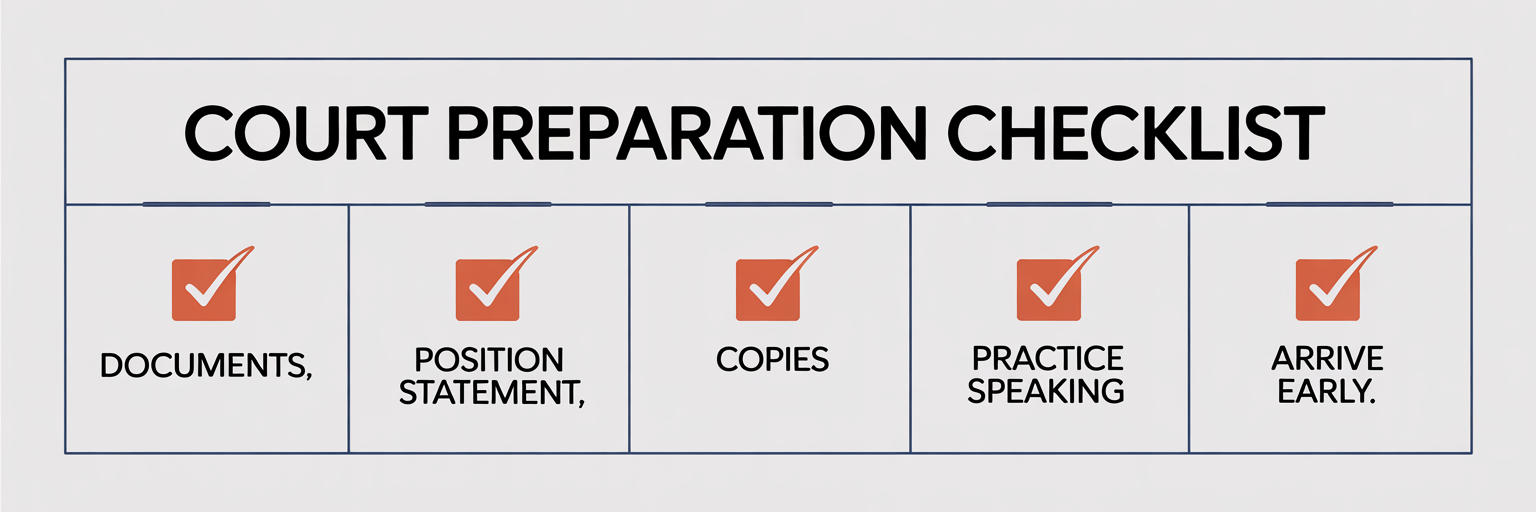
Read every document in your court bundle. Know the timeline of events, the key facts, and what you’re asking the court to order. If you can’t explain your position clearly in two minutes, keep practising until you can.
2. Know What Order You’re Seeking
Be specific. “I want to see my children more” isn’t an order. I’m seeking a Child Arrangements Order for the children to live with me and spend alternate weekends plus Wednesday evenings with their mother” is an order the court can actually make.
3. Prepare a Position Statement
For most hearings, you can submit a short document (1-2 pages) outlining your position, the key issues, and what you’re asking for. This helps the judge understand your case quickly and shows you’ve prepared properly.
4. Organise Your Evidence
Create a chronological bundle of key documents. Use numbered tabs. Highlight the important parts. Bring three copies: one for you, one for the judge, and one for the other party.
5. Anticipate the Other Side’s Arguments
What will they say? What’s your response? Thinking this through beforehand stops you being caught off guard.
6. Practice Speaking Out Loud
Court is not a conversation. You’ll need to address the judge formally, speak clearly, and make your points concisely. Practise at home until it feels less awkward.
“At Family Law Service, we often see the difference preparation makes,” says Jess Knauf, our co-founder. “Two people with identical cases can get completely different outcomes based purely on how well they’ve prepared and presented their position.”
What to Expect on the Day
Walking into court for the first time is daunting. Here’s what typically happens:
Arrival
Arrive at least 30 minutes early. You’ll need to pass through security (like an airport scanner), find your courtroom, and check in with the usher. Court buildings can be confusing, so give yourself time.
Waiting
Family courts often run late. You might wait an hour or more past your listed time. Bring water, snacks, and something to read. Stay calm.
The Hearing Room
Family court hearings are usually in small, informal rooms rather than the grand courtrooms you see on TV. You’ll likely sit at a table with the judge at the head. It’s designed to be less intimidating, though it rarely feels that way.
How to Address the Judge
Call them “Sir” or “Madam” (for District Judges and most family judges) or “Your Honour” (for Circuit Judges). When in doubt, “Sir” or “Madam” is always acceptable. Stand when the judge enters and leaves.
Speaking
Wait to be invited to speak. Don’t interrupt. Keep your answers focused. If you don’t understand something, it’s perfectly acceptable to say, “I’m sorry, could you explain what that means?”
The Other Party’s Solicitor
If they have legal representation and you don’t, their solicitor may try to negotiate with you before the hearing. You don’t have to agree to anything on the spot. It’s fine to say, “I’d like time to consider that.”
Common Mistakes When Attending Court Without a Solicitor
We see these repeatedly at Family Law Service:
Getting Emotional
Courts deal in facts and law, not feelings. Judges understand you’re going through a difficult time, but emotional outbursts or crying throughout your submissions won’t help your case. Take deep breaths. Stick to the facts.
Attacking the Other Party
Focus on what you want and why it’s in the children’s best interests (for children cases) or fair (for financial cases). Personal attacks on your ex make you look unreasonable, not them.
Not Answering the Question
Judges ask specific questions for specific reasons. Answer what’s asked, then stop. Rambling or going off on tangents frustrates judges and wastes your limited time.
Failing to Bring Documents
“I have evidence but it’s at home” is a sentence that helps no one. If a document matters, bring it. Multiple copies.
Agreeing to Things You Don’t Understand
If a judge or the other party’s solicitor proposes something and you’re not sure what it means, say so. Ask for it to be explained. Ask for time to consider. Don’t agree to orders you don’t fully understand.
Ignoring Court Orders
If the court orders you to file a statement by a certain date, do it. Missing deadlines makes judges question your reliability and commitment to the process.
When You Really Should Get Professional Help
Going to court without a solicitor can work well in many situations. But some cases genuinely need professional support:
- Allegations of domestic abuse – These cases involve specific procedures and your credibility is crucial
- Complex financial assets – Pensions, businesses, trusts, and offshore assets require specialist knowledge
- Relocation cases – If your ex wants to move abroad with your children, the legal test is complex
- Finding of fact hearings – Where the court must decide whether alleged events happened
- Final hearings with multiple witnesses – Cross-examining witnesses effectively is a skill that takes years to develop
- Your ex has a barrister – The imbalance can be significant, especially at contested hearings
“I remember a client we had at Mediate UK who’d been through three court hearings alone before coming to us”. – Recalls Jess – “She’d done brilliantly on the first two, but the final hearing involved cross-examining her ex’s new partner. She froze. The outcome wasn’t what she’d hoped for, and she always wondered if having support that day would have changed things.”
How Family Law Service Can Help
You don’t have to choose between expensive full representation and going it completely alone.
Family Law Service offers targeted support for people attending court without a solicitor:
- Court Form Completion – We’ll prepare your C100, Form A, Form E, position statements, and many other court documents correctly
- Court Prep Meetings – To help you understand what to expect, what to say, how to present your case, and what questions you might face
- Case Reviews – Send us your bundle and we’ll give you an honest assessment of your case’s strengths and weaknesses
- CAFCASS Prep Meetings – If CAFCASS is involved, we’ll prepare you for their interview and help you understand how they’ll assess your family
- Fixed Fee Legal Advice – 1-hour consultation to discuss strategy, review proposed orders, or get guidance on specific legal questions
“Think of it as having a coach in your corner,” says Jess. “You’re still the one in the ring, but you’ve got someone who’s helped hundreds of people prepare properly and knows exactly what judges are looking for.”
Many of our clients spend £200-£500 on targeted support and feel significantly more confident walking into court than they would have otherwise.

FAQs About Going to Court Without a Solicitor
Can I really represent myself in family court?
Yes, absolutely. You have the legal right to represent yourself in any family court proceeding in England and Wales. Around 80% of people in family court are now litigants in person at some stage. Judges are used to working with self-representing parties and will explain procedures, though they cannot give you legal advice about your case.
What should I wear to family court?
Smart but comfortable. You don’t need a suit, but avoid jeans, trainers, or anything too casual. Think “job interview” rather than “night out.” First impressions matter, and dressing appropriately shows respect for the court process.
Can I bring someone with me for support?
Yes, you can bring a McKenzie Friend, someone who sits beside you, takes notes, and offers quiet advice. They cannot speak to the court on your behalf (unless the judge grants special permission), but their presence can be reassuring. You can also simply bring a friend or family member to wait outside and support you before and after.
What if the other party has a solicitor and I don’t?
This happens frequently. The judge will make some allowances, giving you slightly more time to make your points or explaining procedures more carefully. However, you’re still held to the same legal standards. Consider getting a case review or court prep meeting to level the playing field, even if you can’t afford full representation.
How do I address the judge?
“Sir” or “Madam” for District Judges (who hear most family cases). “Your Honour” for Circuit Judges. If you’re unsure, “Sir” or “Madam” is always safe. Stand when the judge enters and leaves the room, and wait to be invited to speak.
What happens if I get nervous and forget what to say?
It happens to everyone, including solicitors. Bring notes and refer to them. If you lose your thread, it’s fine to pause, take a breath, and say, “I’m sorry, let me gather my thoughts.” Judges understand this is stressful. Having your key points written down means you can always fall back on your notes.
Can I appeal if I don’t like the decision?
Yes, but appeals are difficult. You generally need to show the judge made a legal error or the decision was plainly wrong, not just that you disagree with it. Appeals have strict time limits (usually 21 days) and require permission. If you’re considering an appeal, get legal advice quickly.
Ready to Take the Next Step?
Filing for divorce is just the beginning. What you’re entitled to financially can make a huge difference to your future security and peace of mind.